
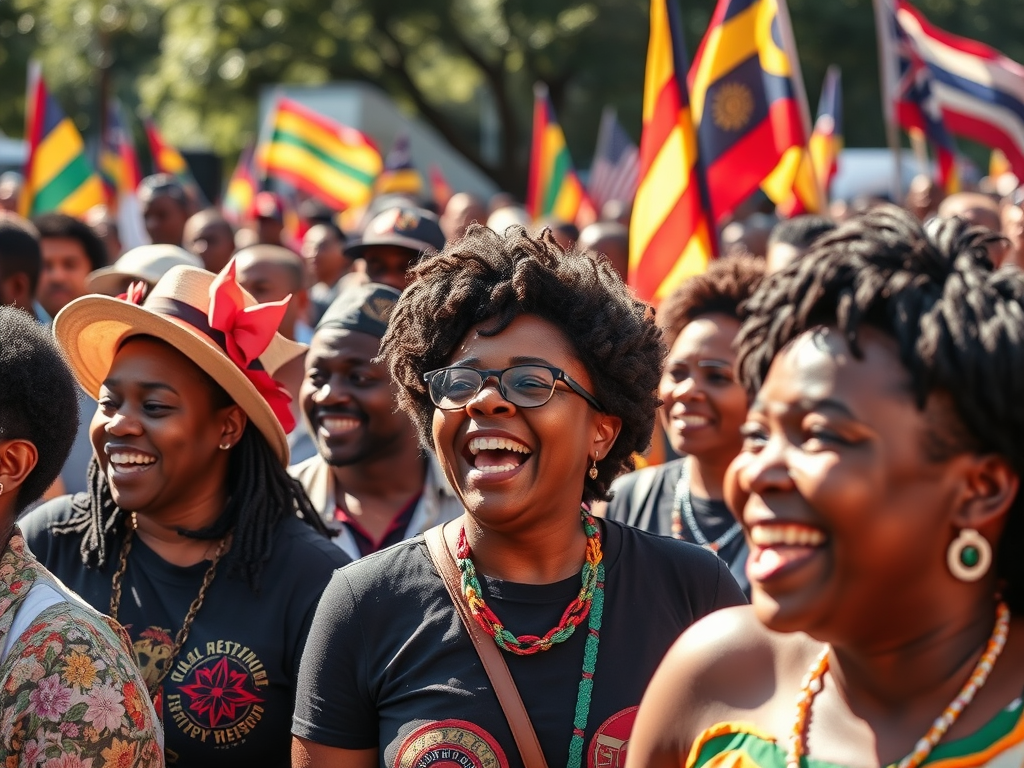
Juneteenth, in 2025, represents both a celebration and a challenge. It’s a celebration of freedom—marking the day in 1865 when the last enslaved Black Americans in Galveston, Texas were told they were free, more than two years after the Emancipation Proclamation. But it’s also a reminder: freedom delayed is freedom denied, and justice requires vigilance.
This year, Juneteenth means acknowledging how far we’ve come—but not pretending we’re done. In 2025, I see Juneteenth as:
- A day of remembrance: honoring the resilience, pain, and triumph of Black ancestors whose fight for dignity shaped the world I live in.
- A day of reflection: on the systems still in place that trace back to slavery—whether it’s disparities in wealth, education, or the justice system.
- A day of joy: in community, music, food, and storytelling that celebrates Black excellence and culture.
- A day of action: pushing myself to keep learning, showing up, and speaking out—not just once a year, but continuously.
For me personally, Juneteenth in 2025 is about asking, “What am I doing to honor freedom—not just for myself, but for others?”
Freedom in America for Black citizens in 2025 is a complex and evolving concept shaped by historical struggles, contemporary realities, and diverse personal experiences. It can mean different things to different people, but several key themes emerge:
1. Freedom as Ongoing Struggle
For many Black Americans, freedom is not a fixed achievement but a continual pursuit. While legal slavery ended in 1865 and civil rights legislation passed in the 1960s, the lingering effects of systemic racism—in policing, housing, healthcare, and education—mean that the promise of true equality remains unfulfilled.
- Police reform and justice: The deaths of George Floyd, Breonna Taylor, and others still resonate, and for many, freedom means living without fear of state violence or racial profiling.
- Mass incarceration: Disproportionate imprisonment rates are viewed as a modern extension of racial control. Freedom often means dismantling the school-to-prison pipeline and investing in rehabilitation over punishment.
2. Economic and Educational Empowerment
Economic freedom is central to the Black experience in 2025.
- Wealth gap: Generational poverty persists due to redlining, employment discrimination, and unequal access to credit. Freedom includes owning property, building generational wealth, and having access to quality education and jobs.
- Black entrepreneurship: A growing number of Black-owned businesses and tech startups represent a form of freedom—control over one’s destiny and legacy.
3. Cultural and Personal Expression
Freedom also means the right to live fully and authentically.
- Cultural pride: Celebrating African American identity, history, and contributions without apology is a vital form of liberation.
- Mental health and healing: The ability to prioritize mental wellness, self-care, and generational healing is increasingly seen as essential to Black freedom.
4. Political Voice and Power
Many Black citizens view voting and political activism as tools of freedom.
- Representation: Increasing numbers of Black elected officials, activists, and policymakers help shift national narratives and priorities.
- Community control: Freedom often means having a say in how neighborhoods are governed, policed, and resourced.
5. Intersectionality
Black freedom is not monolithic—it intersects with gender, sexuality, disability, and class.
- Black women and LGBTQ+ individuals: Freedom includes protection from both racism and sexism, homophobia, or transphobia.
- Youth perspectives: Younger generations are redefining what liberation means—often blending traditional activism with digital advocacy, art, and mutual aid.
Freedom for Black citizens in 2025 is about more than legal rights—it’s about dignity, equity, and opportunity.
It’s a daily effort to push America to live up to its founding ideals while carving out spaces of joy, safety, and power in the face of ongoing adversity.







































 The Truth of the Matter with Tiffani Michele
Leave a comment