
Making room for gratitude, grief, faith, and the work of moving forward.
There are seasons when an announcement tells only part of the story.
A movie project is released. You share the poster, celebrate the moment, and thank the people who supported you. What people see is real: the gratitude, the excitement, the satisfaction of watching your creative work reach an audience.
But there is a life happening outside the announcement.
There are applications to complete, decisions to make, and changes you are still learning how to live with. There is the future you imagined and the present asking you to reconsider some of its details. There are questions that don’t disappear simply because something good has happened.
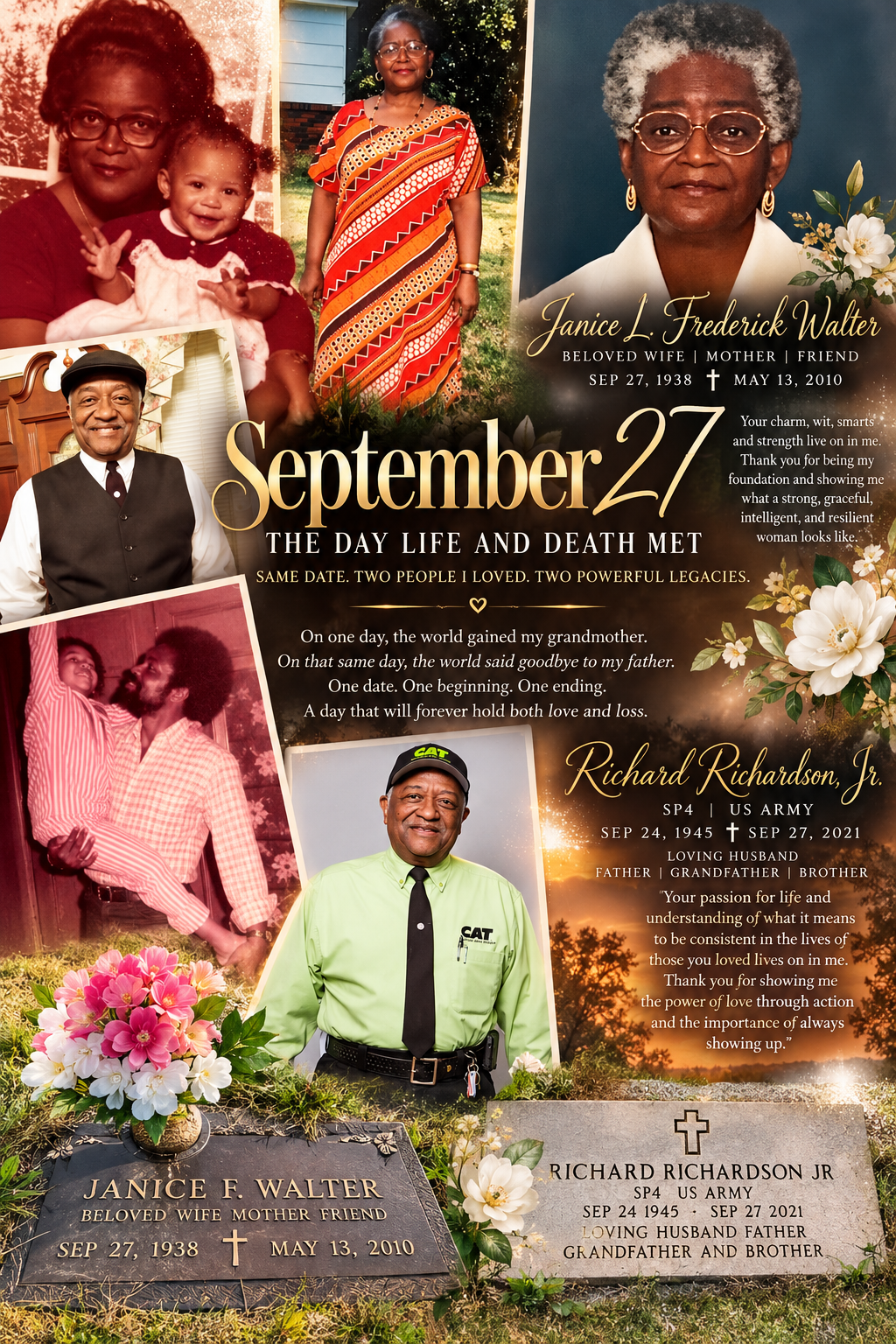
Since my last blog post—the tribute to my dad and grandmother on September 27—several movie projects I have been part of have been released. A relationship has ended. My search for another professional opportunity has continued.
I have reasons to celebrate and reasons to pause. I am grateful, and I am still asking God for direction.
For a while, I wondered what I should write about next. Now I realize that this intersection deserves a conversation of its own. So many of us are living here: accomplished in some areas, uncertain in others, trying to remain hopeful without being dishonest about what life feels like.
The wins are real. So is the waiting.
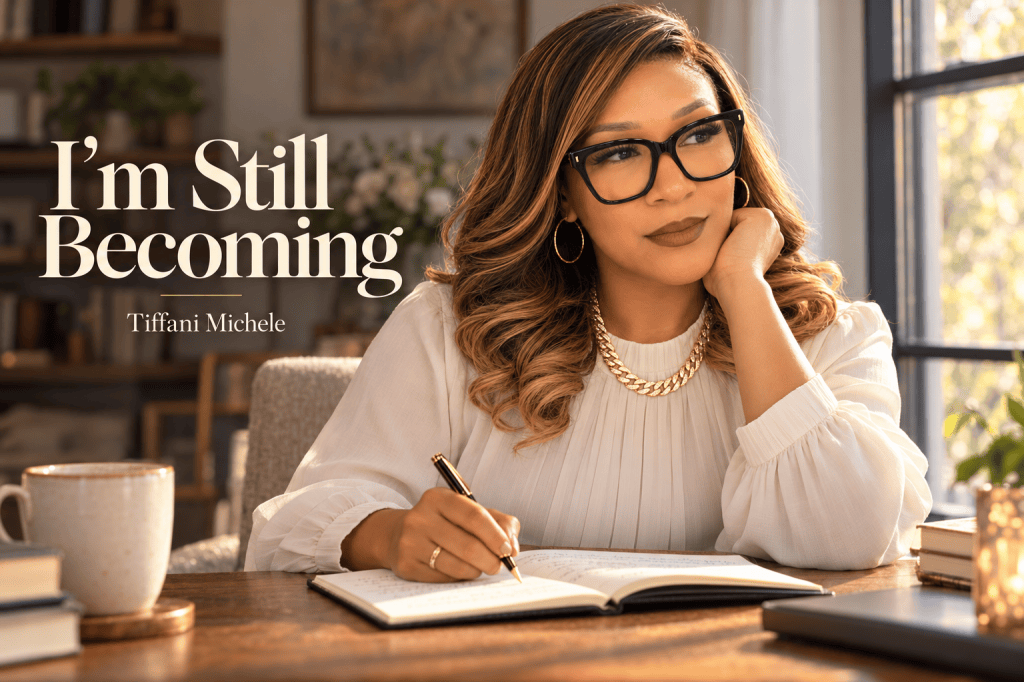
And in the middle of both, I am still becoming.
Who are we becoming while life is happening?
Michelle Obama’s title, Becoming, offers a meaningful starting point for this reflection. The word itself leaves space for movement. It suggests that a person’s story continues beyond a title, an achievement, a relationship, or a particular season.
When I consider that word in the context of my own life, I find myself asking a question that goes deeper than “What happens next?”
Who am I becoming through the way I respond to what is happening now?
That is a more demanding question.
It asks me to consider how I speak to myself when an opportunity hasn’t arrived. How I handle disappointment. Whether I can celebrate someone else while still waiting for something I deeply desire. Whether I am willing to learn from an experience without allowing it to harden every part of me.
It also asks me to examine the expectations I carry.
Somewhere along the way, many of us developed a private timeline for our lives. By a certain age, we expected stability. After a certain amount of experience, we expected opportunity. Once we had done enough personal work, we expected relationships to become less complicated.
Then life continued being life.
We found ourselves making new plans with old experience, carrying wisdom alongside unanswered questions. And sometimes, we interpreted the need to begin again as evidence that we had somehow fallen behind.
But a changed plan does not erase the work that came before it. The experience still belongs to us. So do the skills, the discernment, and the capacity to make a more informed choice.
Becoming asks us to use what we have learned while admitting that there is still more to learn.
Let your life be more than one headline
One of the quiet pressures of sharing our lives publicly is the feeling that we should choose a consistent emotional message.
Are we winning? Healing? Grieving? Starting over?
Real life rarely stays inside one category.
You can experience joy in your creative work while feeling discouraged about your job search. You can miss parts of a relationship while accepting that it has ended. You can be thankful for what you have and honest about what you still need.
The difficulty comes when one unresolved area begins speaking for your entire life.
A delayed opportunity becomes, “Nothing is working out for me.” A relationship ending becomes, “I always get this wrong.” A difficult week becomes a prediction about the rest of the year.
Those statements can feel convincing when we are disappointed. They also leave out a great deal of evidence.
I want to become more careful with the stories I tell myself.
There is a difference between saying, “I am still looking for the right professional opportunity,” and deciding that my experience no longer has value. There is a difference between acknowledging an ending and turning it into a judgment about whether I am worthy of love.
Specific language gives us something we can work with. A sweeping verdict often leaves us feeling powerless.
Try this: Divide a page into three sections: What I’m celebrating. What I’m grieving. What needs my attention.
Write something honest in each section. Resist the urge to make one section cancel another. Then choose one item under “What needs my attention” and identify a manageable next step.
You may discover that your life contains more possibility—and more support—than the hardest part of it has allowed you to notice.
Bring the unfinished version of yourself to God
My faith is central to how I understand this season. It is also where I want to be most honest.
There can be pressure to make uncertainty sound spiritually polished. We reach for a reassuring phrase before we have named the disappointment underneath it. We feel obligated to explain why something happened, even when we don’t know.
I don’t have an explanation for every ending. I cannot tell you why every application leads somewhere or why another does not. I am learning to let prayer hold those unanswered questions.
Sometimes an honest prayer begins with, “God, I am grateful, and I am tired.”
Sometimes it is, “I believe You are with me, but I need help knowing what to do today.”
That kind of honesty makes room for a relationship with God that can sustain real life.
Philippians 1:6 reminds me of God’s continuing work in His people. I take comfort in that assurance without treating it as a promise that my preferred outcome will arrive on my preferred schedule.
Faith gives me a place to stand while I make decisions. It also invites me to examine the person making them.
Am I responding from fear? Am I avoiding something I already know needs attention? Am I so committed to one possible outcome that I have stopped considering another worthwhile path?
Try this: Set aside ten quiet minutes and write a prayer in three parts:
- God, this is what I’m grateful for.
- This is what I’m struggling to carry.
- This is where I need wisdom for my next step.
Afterward, identify one practical response that is within your control. Make the call. Ask the question. Revise the application. Schedule the rest you keep postponing.
You do not need to manufacture certainty before taking a thoughtful step.
Give an ending room without giving it your whole future
A relationship ending can require us to reconsider more than the relationship itself. We may also be grieving routines, hopes, companionship, and the future we had begun to imagine.
That deserves care.
There is no requirement to turn every private experience into public content. We can share what we are learning while keeping the details that belong in a more personal space.
For me, the useful questions reach beyond who was right or wrong. What did I need? How clearly did I express it? What did I learn about how I respond when I feel hurt or uncertain? What do I want to practice differently in the future?
Those questions allow for accountability without asking me to take responsibility for another person’s choices.
They also make space for tenderness. Missing someone does not require an immediate decision. Feeling lonely does not mean every conclusion needs to be reconsidered. An emotion can deserve attention without becoming an instruction.
Try this: Write down three things you learned about your relationship needs. Make them specific enough to guide future choices.
“Communication matters” is a beginning. “I need someone who can communicate a need for space and discuss when we will reconnect” gives that need a clearer shape.
Then ask yourself how you intend to communicate those needs and what consistent behavior would look like in practice. Give yourself time to reflect before deciding what comes next.
Keep your confidence connected to evidence
Searching for a job can test a person’s sense of worth in ways that are difficult to explain until you are in it.
You know what you have contributed. You know the problems you have solved, the people you have supported, and the experience you bring. Still, repeated applications and uncertain responses can make you question what you once felt sure about.
This is where I believe we need both encouragement and a strategy.
Encouragement reminds us that a hiring decision cannot measure our entire value. Strategy asks whether our materials clearly communicate our experience, whether we are pursuing appropriate opportunities, and whether we have invited useful feedback.
Both matter.
I want to remain open to improving how I present myself without treating every unanswered application as proof that I am inadequate.
Try this: Create a short record of your professional contributions. Include three problems you helped solve, three outcomes you influenced, and three strengths you can support with examples.
Use that record when tailoring your résumé, preparing for interviews, or introducing yourself to a professional contact.
Then set a weekly goal based on actions you can complete: a few carefully selected applications, one thoughtful follow-up, or a conversation with someone who can offer insight. Choose a pace that allows you to remain attentive and consistent.
At the end of the week, review what you learned as well as what you completed. Your effort deserves a more useful measure than whether an offer has arrived yet.
Allow joy to have its full moment
When one part of life feels uncertain, celebration can begin to feel premature.
We tell ourselves we will enjoy this achievement once the next concern is resolved. We turn a meaningful milestone into a brief stop on the way to something else.
I want to be more intentional about resisting that habit.
Those movie releases matter. They represent work, preparation, collaboration, and the courage to participate. I do not want worry about another part of my life to take every bit of attention away from something I once hoped to experience.
Celebrating a win does not obligate us to feel happy about everything.
It simply asks us to notice what happened and allow it to matter.
Try this: Choose one recent accomplishment you moved past too quickly. Write down what it required of you and why it matters.
Then mark it in a way that feels meaningful. Share it with someone who understands the effort. Take yourself to lunch. Save a photograph or a few words about the moment. Give thanks without immediately adding a list of what is still missing.
Practice receiving the good that is already here.
Turn reflection into a way of living
It is possible to understand ourselves more deeply and still return to the same habits. Insight becomes useful when it influences our choices.
For me, intentional living means bringing these reflections into ordinary days. It means considering what gets my attention, what I agree to, and how I use the energy I have.
If I say I value my creative growth, where is there time to study my craft?
If I say I need rest, what am I willing to stop doing long enough to receive it?
If I say I want healthier relationships, how am I practicing clarity, consistency, and honest communication myself?
These questions require a willingness to make small changes repeatedly.
Try this: For the next seven days, choose three commitments:
- One action for your future: Complete something that supports a professional, creative, or personal goal.
- One action for your well-being: Protect time for something that helps you feel rested, connected, or cared for.
- One action for your faith: Make room for prayer, Scripture, reflection, or a conversation with someone you trust spiritually.
Keep the commitments realistic. At the end of the week, ask what helped, what became difficult, and what needs adjusting.
You are learning how to support the life you want to live.
You are allowed to be a work in progress
When I remember my dad and grandmother, I think about what their lives continue to teach me. Their influence lives in how I love, how I persevere, and how I choose to show up.
I can honor those gifts while continuing to discover what they will look like in this chapter of my own life.
Today, I am an actress celebrating projects that have reached an audience. I am a professional seeking another opportunity. I am a woman making sense of a personal ending. I am a person of faith asking for wisdom.
All of those things are true.
My responsibility is to live attentively within that truth: to celebrate what deserves celebration, care for what hurts, and act where action is possible.
Perhaps that is an invitation for you, too.
Before you move on from this page, take a moment with these three questions:
What deserves gratitude in my life today?
What needs honesty and care?
What is one step I can take with the resources and understanding I have right now?
Write down your answers. Give that next step a place in your day.
There may still be unanswered questions after you take it. There may still be grief, uncertainty, and work ahead. You can carry those realities while developing a deeper trust in your ability to meet life thoughtfully, with God’s help and the support of people who care about you.
My prayer is that I remain open enough to learn, grounded enough to make wise choices, and gentle enough with myself to recognize growth while it is happening.
I have more living to do, more to contribute, and more to understand.
I’m still becoming.
—Tiffani Michele












































Leave a Reply